- Home
- Departments
- Utilities
- Environmental Programs
- Education & Outreach
Education & Outreach
To report pollution or water waste violations use Report It! or call Public Works 760-839-4668.
Community members are invited to take part in opportunities offered throughout the year to learn about our City's water resources. Water is a vital component in sustaining a healthy community, which is why learning how to conserve and protect its quality is a benefit for each of us.
- Homeowners can participate in a landscape workshop to learn how to create a California friendly landscape.
- Teachers may supplement their science curriculum with free water education presentations. Presentations are tailored to grade level and align with Next Generation Science Standards. Presentations are available for grades K-5. For more information or to schedule a presentation, please contact the City Education Specialist at 760-839-4071 water@escondido.gov.
- Community group presentations can be provided to help interpret and understand water regulations and policies.
- Water quality brochures are available on to learn about how to prevent storm water pollution in your home and business.
- Participate in Project Clean Water's 52 Ways to Love Your Water pledge campaign.
4th Grade Poster Contest
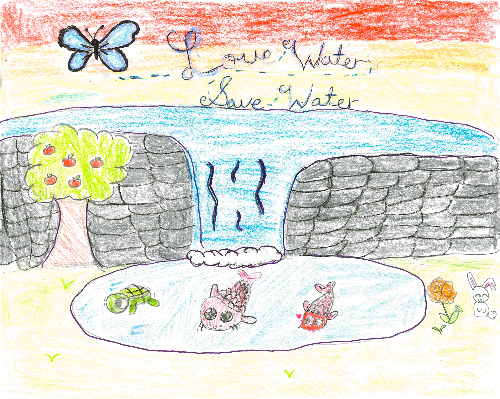
Congratulations to the 12 finalists in this year's 4th Grade Water Awareness Poster Contest! We will announce 1st, 2nd, and 3rd place winners on May 21. The top three drawings will be published in a 2026 student calendar along with the winning artwork of other North County students.
Thank you to all of the talented 4th grade students who entered, and to all the dedicated teachers who brought this opportunity to consider and illustrate the value of water to their classrooms.
Water Science Education
Water Science Presentations
The City proudly supports local public and private schools, by providing Water Science Education Programs to elementary and afterschool programs. The programs teach water science to raise awareness of Earth's resource through interactive and collaborative activities that supplements science curriculum and helps meet Next Generation Science Standards.
Water Topics
- Intro to Water
- Hydrologic Cycle
- Water Resources
- Water Treatment Process
- Watershed Science
Contact the Environmental Programs staff at water@escondido.gov or 760-839-4071.
Splash Lab Science Mobile
The City sponsors a limited number of Splash Science Mobile Lab visits to 4th and 5th grade classes to get a hands-on experience with water issues
Online Water Educational Resources for Parents
- EPA
- USGS
- NOAA
- California Department of Water Resources
- California State Water Resources Control Board
- San Diego County Water Authority
- Caltrans
- San Diego Natural History Museum
- Arizona Water Conservation Campaign
- Project WET
Printable Resources
Workshops & Cleanups
Residential Workshops
WaterSmart Landscape Classes
In partnership with Metropolitan Water District, the City of Escondido provides free WaterSmart landscape classes to its residents. Our next class will be in-person on Saturday, February 28 from 10-11:30am at City Hall, in the Mitchell Room. Learn more or save your seat at https://www.greenmediacreations.com/mwdclasses/198ad2c0-31b1-48b2-af92-a6d6db201b2b
Compost Workshops
Did you know that using compost in your garden can support water retention? This means saving water during droughts and reducing erosion during rains. Compost Workshops are hosted three times a year by the Recycling Division and the Escondido Community Garden. For workshop dates and directions, visit the Recycling Division's webpage.
Water Efficient Landscape Professionals Dual Certification Program (WELDCP) - Spring 2026
The San Diego County Water Authority hosts free WELDCP workshops in the spring and fall each year. Stay tuned for details on the upcoming Spring 2026 series.
For more information, please visit member.clca.org
Creek to Bay - April 25, 2026
Thank you to all the dedicated volunteers who came out to Reidy Creek on Saturday, September 20! Together, we removed approximately 10 cubic yards of litter from the waterway and its eastern bank. Stay tuned for more information about our next creek cleanup in April!
WaterSmart Landscape Contest
Congratulations to Escondido's 2025 WaterSmart Landscape Contest, Yannick Claerman!
Yannick’s landscape transformation process included research on drought-tolerant plants, plant groupings, soil types, and how to use compost and mulch to enhance water efficiency. Visits to local demonstration gardens provided him with a little extra inspiration as he began curating a selection of manzanitas, native irises, yarrows, monkeyflower, and multiple varieties of sages. Even one patch of lawn that was left aesthetically unchanged has had its own incognito transformation: Yannick replaced this section of grass with 250 Dwarf Carpet of Stars plants – a succulent with a close-growing pattern that not only supports foot traffic, but also leaves no room for weeds to grow up in between. The plants are now slowly growing in, and once they do, it will look as if the lawn never left!
Although Yannick and his wife decided against removing the existing mature palm trees and added a variety of fruit trees and other edible plants alongside the drought-tolerant backdrop, Yannick still found ways to keep the use of potable water to a minimum. By capturing rain and gray water, and installing a 2650-gallon rainwater tank for storage, the garden makes the most of rain as well as reclaimed water from roof runoff.
Yannick feels rewarded not only by the beauty of the garden, but also by the knowledge that his work to craft a resilient home landscape will contribute to broader efforts by gardeners everywhere to make a more sustainable future.
Ready for your own Turf Transformation?
Attend a landscaping workshop to learn about water-wise landscaping and how you can start saving water while refreshing your landscape! The Environmental Programs Division hosts classes in partnership with Metropolitan Water District throughout the year.
Access on-demand Landscape Makeover videos from the San Diego County Water Authority. Browse a library of brief informational and how-to videos for every step of your project from identifying your WaterSmart target, getting to know your soil and selecting plants to how to execute your transformation and irrigate your new landscape like a pro!
Water Quality Brochures
Most residents are concerned about keeping our waterways clean. In fact, surveys conducted across San Diego County show that more than 50% of residents believe that pollution of our beaches, lakes, and creeks directly affects them and their families.
Water that is released to the streets, gutters, and storm drains in San Diego County IS NOT TREATED before it reaches our local creeks, rivers, and the ocean. All sources of pollution, including soil and sediment, are prohibited from leaving your property and entering streets or storm drains. Only rain in the storm drain.
Everyone who lives, works or visits Escondido plays an important role in minimizing the effects of urban runoff and safe-guarding the water quality in the receiving creeks. Help us protect and improve the quality of urban runoff and stormwater:
What is storm water pollution?
Storm water pollution is untreated water that drains from streets, parking lots, driveways, sidewalks and other impervious surfaces.
Where does it go?
Into the storm drain system. This system is NOT connected to the sewer system, which means storm water is untreated. The storm drain system is made up of curbs, gutters, and pipes. All water that drains off our yard, streets, and parking lots goes into the storm drain system and ends up in our creeks, rivers, and ocean completely untreated!
What can I do to help?
- Pick up after your pets
- properly dispose of trash
- wash paint brushes in the sink
- sweep it up, don't hose it down
- dispose of hazardous materials by calling Escondido Disposal at (760) 745-3202
Other Best Management Practices to Protect Water Quality
Landscaping
- Decrease the use of lawn and garden care products such as pesticides, weed killers, and chemical fertilizers. Consider using non-toxic pest control methods.
- Avoid over watering which may wash these products into the storm drains.
- Use rain barrels to collect rainwater. For rebates: socalwatersmart.com
Pets
- Protect yourself and your family by picking up pet waste at home and in public.
- Take a bag when you walk your pets. Dispose of the bag in a trash can.
In the Kitchen
- Do not pour cooking grease down the drain. Grease that is poured down the drain eventually hardens and causes sewer back ups, and spills which can contaminate our creeks, lakes, river, and ocean.
- Collect grease in a disposable container. Wait for the grease to cool, then dispose of it in a trash can.
Automotive Care
- Wash your car at a commercial car wash where they recycle the wash water or on a pervious area to avoid runoff into storm drains.
- If washing your car in Escondido, you must use a hose with a shut-off nozzle.
- Fix fluid leaks immediately. Collect used oil in sealed containers and take it to a certified center. For the certified center nearest you, call1-800 CLEANUP.
Litter
- Make sure to always put trash in its place.
- Secure lids on trash containers.
- Keep a litter bag in your car.
Prevent pollution and water waste with these important tips for reducing water runoff from yards, lawns, and gardens—contributors to urban pollution in our local waterways.
- Adjust sprinklers so they don't spray onto streets and sidewalks.
- Repair leaking or broken sprinklers.
- Water in short cycles to allow water to absorb into the soil.
- Water before 10 a.m. or after 6 p.m. Cooler temperatures reduce evaporation.
- Replace turf with drought-tolerant or native plants. Visit www.WaterSmartSD.org for current rebate and incentive programs.
- Turn off sprinklers during and within 48-hours of a rain event.
Yard drains including French and sub-surface drains are intended to carry stormwater from your property to the curb. However, they are not meant to carry water from other sources such as irrigation runoff or wash water from your property. This additional water from these activities may carry pollutants like pesticides, herbicides, and fertilizers into our waterways, and excess ponded water may also create a breeding ground for mosquitoes. Here are a few important tips for preventing backyard runoff from entering the street or storm drain:
- Redirect sprinkler heads away from yard drains.
- Use a broom or mop to clean your yard, patio, and furniture.
- Temporarily cover your yard drain with a mat except during storms.
- Avoid application of fertilizers and pesticides prior to rainfall.
Both the dust you wash off and the products you use to wash with may pollute our waterways. Wash water can carry these pollutants into the storm drain system. The City of Escondido’s Environmental Programs Division supports businesses in their efforts to prevent pollution by offering these important Stormwater Best Management Practices (BMPs):
- Keep containment recovery area as close as possible to vehicle washing.
- Sweep and pick up trash, debris, and sediment within wash area.
- Contain and recover all wash water with berm and vacuum system.
- Whenever possible, wash vehicles over a pervious surface (landscaping, soil, etc).
- Conserve water by using a pressure washing system with a shut-off nozzle or use dry cleaning methods.
- Dispose of wash water into landscaping or into the sewer system.
- Use non-toxic and less hazardous cleaning products.
- Reduce or eliminate the use of soaps, degreasers, or other cleaning agents.
- Keep materials and equipment necessary for containment and recovery of wash water in all vehicles and in a centrally accessible location.
Releasing pollutants directly or indirectly into the storm drain system or waterways is a violation of Escondido’s Municipal Code (Chapter 22). Your business is required to comply with the Municipal Code and these minimum BMPs.
Vehicles, including boats, RVs and trailers, provide a way for residents to enjoy all that San Diego County has to offer, but when water from washing these vehicles gets into the storm drains, it can cause problems for our waterways. Use these important tips for preventing vehicle wash water from entering the storm drain:
- Use a commercial car wash whenever possible.
- Commercial car washes use water recycling systems.
- Wash your vehicles on a landscaped area to prevent runoff and allow the ground to filter the water naturally.
- Use a hose with a shut-off nozzle to save water.
- Use soap sparingly and pour your bucket of soapy water down the sink when you are done and never into the street.
Swimming pools, spas, and decorative fountains are part of the Southern California lifestyle, but when not properly maintained, they can cause problems for our waterways. Prevent pollution with these important tips for pool and spa maintenance:
- Follow manufacturer's instructions for all pool chemicals.
- Dispose of liquid waste from pool and spa filters into a sink drain. Dispose of solids from pool and spa filters into a trash bag and then rinse the filter into a landscaped area or sink drain.
- Contact Public Works before deciding to drain your pool at 760-839-4668
- Drain water into a storm drain only if the water is within a pH of 6 to 9 and is reduced to 0-mg/L of chlorine or bromine and does not contain algaecides or acid wash.
- Control algae with chlorine, organic polymers, or other alternatives to copper-based chemicals.
- Do not drain salt water pools into the storm drain system.
Spills at construction sites can flow into storm drains and pollute the ocean or bay. These spills are prohibited by law. The following Best Management Practices (BMPs) are to be implemented at all construction sites in the City to protect storm drains and minimize pollution:
Earthmoving Equipment
All earth moving equipment should be stored on site. Maintenance should also be conducted on site.
Washout Area
The disposal of "wet" construction materials should be handled in the washout area. This includes paint, stucco, and concrete. Use a sand berm or equal and tarp to prevent run-off in nearby areas. The washout area must be checked and maintained daily to ensure compliance.
Soil & Grading
Stock piled soil and gravel must be stored on site and covered. Dust control shall be maintained throughout all phases on construction. During the rainy season (October 1 - June 1) additional gravel bags, tarps, Visqueen, etc. must be stored on-site for emergency repair.
Concrete Trucks/Pumpers
Pumpers must be surrounded by perimeter controls, such as gravel bags and straw wattles. Tarps also must be placed beneath concrete pumpers at all times. Residual materials must be cleaned up as well.
Perimeter Controls
Gravel bags, silt fences, and straw wattles are acceptable perimeter controls, and shall be used to surround the entire site. Avoid running over perimeter controls with vehicles or heavy equipment, as they can damage the materials. Keep extra absorbent materials and/or a wet/dry vacuum on site to quickly pick up spills. Sites must also be checked and maintained daily.
(3" Gravel With fabric Underlay) Stabilized Construction Entrance
Tracks and trials off site are not acceptable. All equipment must use the stabilized construction entrance. Alternately, do not drive on/off unpaved areas.
Dumpsters
Always cover dumpsters with a rollback tarp. Dumpsters shall be located on-site. Never allow debris on the ground.
Building Materials/Staging Areas
Construction materials must be stored on site at all times. Building materials must always be covered when not in use to prevent run-off caused by wind or rain.
Paint & Stucco
All paint and stucco material sstored on the site must be contained and covered. It is illegal for contractors to wash out paint brushes into the street or dump any residue in the sotrm drain. Paint brushes and spray guns shall be washed/cleaned out into hazardous materials drum or back into its original container and disposed of properly.
Although they are natural substances, soil and dirt that enter the storm drain system can cause problems for our waterways by filling in streams and blocking sunlight that organisms need to live. Prevent pollution with these important tips for preventing soil and sediment from entering the storm drain system:
- Plant shrubs or ground cover and use mulch to keep topsoil in place and prevent erosion.
- Use gravel to stabilize unpaved parking areas and avoid spreading dirt into the street.
- Plan grading or terracing projects during the dry season if possible (typically May – Sept.).
- Cover stockpiles of soil, mulch, and gravel.
- Use drought-tolerant or native plants to reduce water use. Visit www.WaterSmartSD.org for current rebate and incentive programs.
- Install physical barriers like rocks or garden edging between your yard and the street or sidewalk.
The City of Escondido’s Environmental Programs Division supports businesses in their efforts to prevent pollution by offering these important Stormwater Best Management Practices (BMPs):
Grease Management
- Have a licensed grease hauler service your trap or interceptor on the cleaning schedule prescribed by the Environmental Compliance. Keep records from trap and interceptor cleanings.
- Regularly clean and inspect your grease bins. Monitor liquid levels to avoid overfilling.
- Capture and store used oil, grease, and oily liquids in a grease bin. Do not pour used oil, grease, and oily liquids down a sink, floor drain, storm drain, or into a dumpster.
- Grease bins must have a secured lid or covering, and If stored outside must be under a cover with secondary containment.
- Store grease bins securely on level ground or in a contained area to prevent bins from tipping over.
- Regularly clean grease hood vents (rooftop grease exhaust fans).
Indoors
- Sweep and mop floors daily. Mop water must be disposed of indoors in a mop sink or other sewer drain.
- Use three-eights (3/8) inch or smaller screens on drains to trap solids.
- Wash mats, filters, and garbage cans in a mop sink or designated area with a drain to the sewer system.
- If mats are too large to clean indoors, contract with a mat-cleaning service.
- Pour any water containing soap, bleach, or disinfectants into a sink.
Outdoors
- Clean litter and food waste daily by sweeping and vacuuming.
- Provide trash cans with lids to discourage littering.
- Keep dumpster areas clean and free from debris by using dry methods such as sweeping and vacuuming. Keep dumpster lids closed when not in active use. If there are no dumpster lids, construct a permitted cover over the enclosure.
- Monitor for irrigation run-off and coordinate repairs to prevent discharge to the storm drain.
- If outdoor areas need to be power washed, there must be containment in place for the liquid and a recovery method such as a vacuum system to capture and dispose of it.
- Dispose of all water into a drain to the sewer system. Never let wash water enter the storm drain.
Employee Training
- Train all employees on stormwater BMPs, pollution prevention, and spill clean up.
- Maintain training records on site.
For more information and other ideas, contact Environmental Compliance at the Hale Avenue Resource Recovery Facility (HARRF) at 760-839-6290.
Releasing pollutants directly or indirectly into the storm drain system or waterways is a violation of Escondido’s Municipal Code (Chapter 22). Your business is required to comply with the Municipal Code and these minimum BMPs.
Industrial and commercial business have a responsibility to comply with state and federal regulations to prevent adverse environmental impacts as a result of business activities. Pollution prevention through the implementation of Best Management Practices (BMPs) eliminates harmful pollutants from entering local waterways untreated via the storm drain system.
For more information, BMPs and resources, visit our Industrial & Commerical Business page.
Thank you for doing your part to protect our waterways. For more information, contact us at water@escondido.org or call (760) 839-4657.